
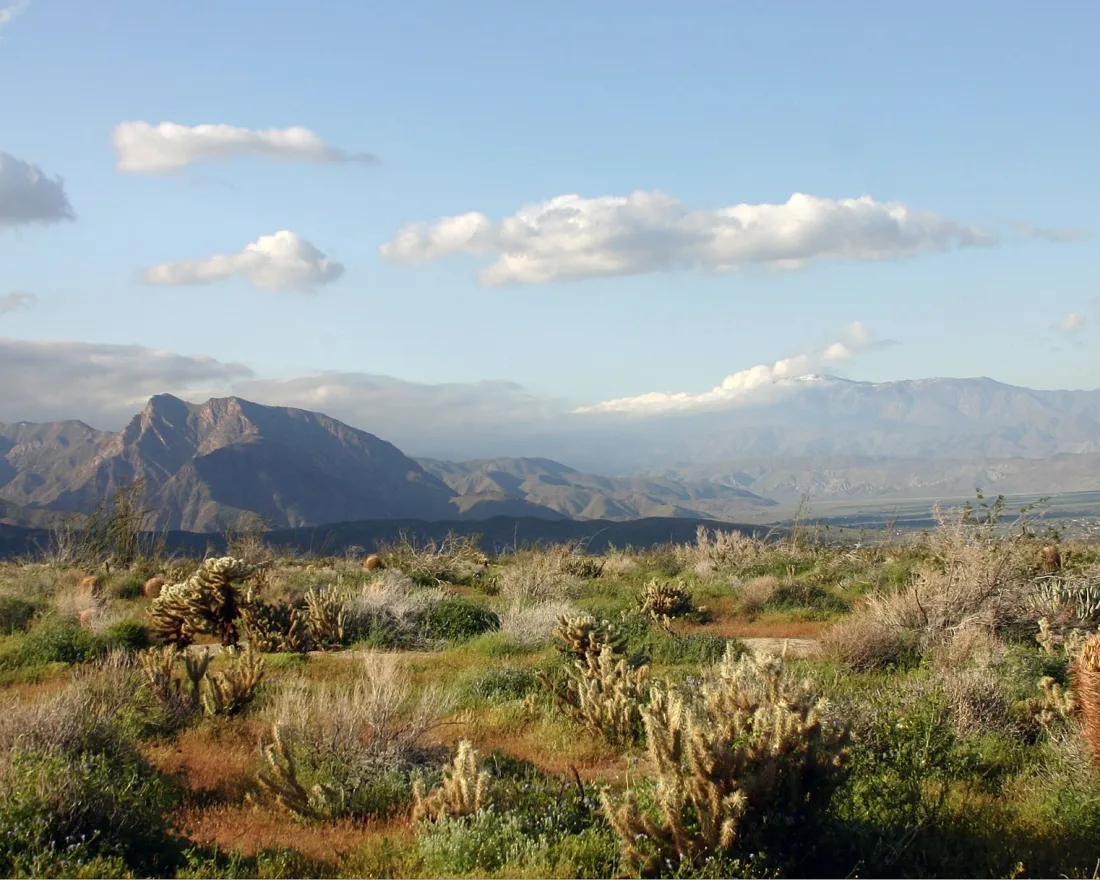
The Cactus-to-Coast Drive: See the Desert, Mountains and Beach All in One Day
An Itinerary for a Scenic San Diego Road Trip
Thanks to Southern California’s unique geography, San Diego is one of the few places in the continental U.S. where you can swim in the sea, see pine-filled mountain forests and admire the stark beauty of a scorched desert all in one day — and without having to do any long-haul driving. San Diego’s rural communities in East County are just one hour away by car and the gateway to the Cleveland National Forest, Laguna Mountains and Anza-Borrego Desert State Park. The winding highways in the backcountry are popular with day trippers and motorcycle riders since they traverse different elevations and are dotted with scenic viewpoints — you’d never guess this kind of untamed landscape is just outside the city. The region also experiences a fuller range of the four seasons, and in the winter months there’s a good chance of seeing snowfall. Here’s an itinerary for a scenic road trip in San Diego that encompasses the beach, mountains and desert that can easily be done in one day, and which the whole family will enjoy.
Morning: Gateway to the Backcountry
From coastal or central San Diego, head east to Ramona. The town was named after a popular novel written in the late 1880s, and today it has numerous farms, award-winning vineyards and a charming main street. Opt to take California State Route 67, which snakes through boulder-dotted canyons and past Iron Mountain. Once in town, stop at Main Street Coffee for a specialty cup of joe. If you want a filling breakfast, consider the famous half-pound cinnamon rolls at Ramona Cafe, a beloved local diner that was featured on Food Network’s “Diners, Drive-Ins, and Dives” and is a popular spot for hikers to fuel up before ascending nearby Mount Woodson, known for Potato Chip Rock. While you’re here, check out the town’s colorful murals along Main Street and the antiques and artifacts at the Guy B. Woodward Museum. A unique attraction on the outskirts of town is the Oasis Camel Dairy, a farm that produces soaps, lotions and other products from camel milk — tours are available on select weekends.

Mid-Morning: Explore the Mountain Towns of Santa Ysabel and Julian
Continue east to two picturesque mountain towns, Santa Ysabel and Julian. While coastal San Diego is generally 70 degrees and sunny, these communities are at higher elevations and experience wildflower blooms in the spring, changing leaves and cool temps in the fall, and Julian receives snow in the winter.
Santa Ysabel is a popular rest stop for travelers for some relaxing shopping and good eats. Set in a chic farmhouse space, Farmhouse 78 is a modern country cafe with fun appetizers like fried green tomatoes and PB&J chicken wings, solid burgers (try the “hog wild” with wagyu beef mixed with wild boar) and seasonal salads. Pop into Dudley’s Bakery for a pastry for the road and the assortment of breads — the bakery has been in town for more than 50 years and famous for its fresh-baked loaves. The landmark Santa Ysabel Store & Backcountry Visitor Center is housed in a restored wood-frame building dating back to the late 1800s and was recently reimagined into Olive and Oak, a home and garden shop with European antiques, coffee table books, and lots of design and landscaping inspiration.
The former mining town of Julian is one of the most popular destinations in San Diego’s East County, especially in fall when the air turns crisp and the region’s famous apple orchards are open for the “u-pick” season. Year-round, Julian’s apples are baked into pies or pressed into cider, and the town is practically synonymous with apple pie. No visit is complete without a stop at Julian Pie Company, where the Smothers family has been baking their signature flaky-crusted pies for nearly 40 years — try a slice of the classic or Dutch apple warm with a scoop of vanilla ice cream. Moms Pie House is another local institution serving apple pies daily, and they’re also known for “bumbleberry” pies, a mixture of blackberries, blueberries and raspberries.
While hoppy craft beer may reign in San Diego, in Julian, apple cider is the drink of choice. Local cideries craft flavorful, fruit-forward beverages — and as a bonus, cider is naturally gluten-free. Julian Hard Cider offers flights of their popular ciders that come in interesting flavors like apple pie and tart cherry in their tasting room at Julian Station, a former apple packing facility that is now a community hub of shops, a restaurant and live music. Calico Cidery produces ciders without any added sugars and its scenic tasting room is set on the family orchard. For non-alcoholic apple cider, visit Julian Cider Mill, where you can also pick up locally made honey and apple butter. To delve more into the community’s historic connection to the California Gold Rush, stop by the Julian Pioneer Museum and then check out the Julian Mining Company, where you can pan for gold or sift through a sluice for gemstones.
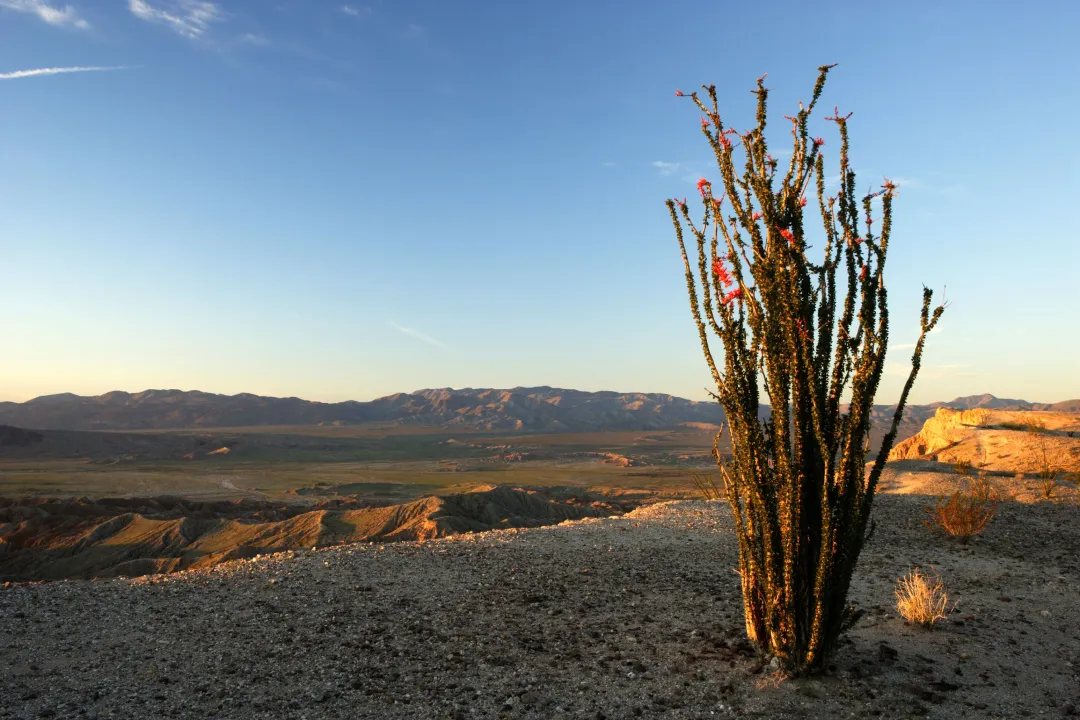
Afternoon: Desert Vistas
From Julian, you can drive down a scenic byway to admire San Diego’s desert landscapes without having to make a special trip or committing to an extended detour. Just past town, head south on California State Route 79. About 1.5 miles out, watch for a blue sign that says “Vista Point” which leads to Inspiration Point Road and the turnout for Desert View Park. Stop here for a clear view of the mountains and valleys just outside the western edge of Anza-Borrego Desert State Park, the largest state park in California. From this vantage point — at more than 4,000 feet elevation — you can see State Route 78 cutting across the desert, and on a clear day you may be able to see the Salton Sea (an isolated lake) off in the distance.
Continue south on State Route 79 to connect to the Sunrise Highway (County Highway S1), a two-land road that loops through the Laguna Mountains and Cleveland National Forest. You’ll coast along a winding road and witness the landscape shift from fruit orchards and chaparral to pine and oak trees as you climb to elevations of 5,000 to 6,000 feet. Multiple points along the Sunrise Highway connect to trailheads that access the famed Pacific Crest Trail. Keep an eye out for wildlife, too — you may be able to spot deer, coyotes and hawks.
Be sure to stop at Mount Laguna Meadow, a popular starting point for hiking trails in warmer months and a sledding spot during winter snowfall. A little farther south, Storm Canyon Overlook near mile marker 26.5 offers another breathtaking vista of the Anza-Borrego Desert. A spacious parking area and renovated viewing platform provides a breezy look at the canyons and desert floor below. From here, you can see the green patches of the Laguna Mountains’ coniferous forest thin out and fade into parched hillsides, marking the start of the rain shadow: a dry region on the eastern side of the mountains where the terrain rolls into an arid desert. Continue on south to the Laguna Mountain Visitor Information Center for helpful details on exploring the national forest. As you descend from the mountains and approach the community of Pine Valley, the Sunrise Highway intersects with Interstate 8 West, leading back to San Diego.

Evening: Toes in the Sand
With the mountains in the rear view, cruise west on Interstate 8 until the very end, where the freeway flows into Sunset Cliffs Boulevard and leads to the bohemian seaside community of Ocean Beach. Celebrate the end of your day trip adventure with a walk on the sand or a quick refreshing dip if the sun is still out. Head over to Newport Avenue, the community’s main drag, for dinner or drinks and to catch the sunset. The Holding Company is a three-story venue with a rooftop that offers striking views of the Ocean Beach Pier and coastline, where you can enjoy the famous spicy garlic chicken wings and fried rice from sister restaurant OB Noodle House & Sake Bar. Down the block, the seating at Wonderland Ocean Pub faces expansive windows with panoramic views, making it the perfect spot to soak in the coastal scenery. Try the surf and turf burger — a hamburger patty topped with garlic prawns and melted Oaxaca cheese — or the fried fish tacos.
Mission Beach and the iconic Belmont Park are just north of Ocean Beach and offer a lively alternative to wrap up the evening. With a classic boardwalk, amusement park attractions and plenty of seaside dining options including rooftop sushi at Cannonball, Belmont Park is a great spot to relax and toast to the day’s end at the beach.
Note: During Pacific Standard Time (fall and winter), sunset times in San Diego range from about 5 p.m. to 6 p.m.; during Daylight Saving Time (spring and summer), sunsets are later, generally from 7 p.m. to 8 p.m.
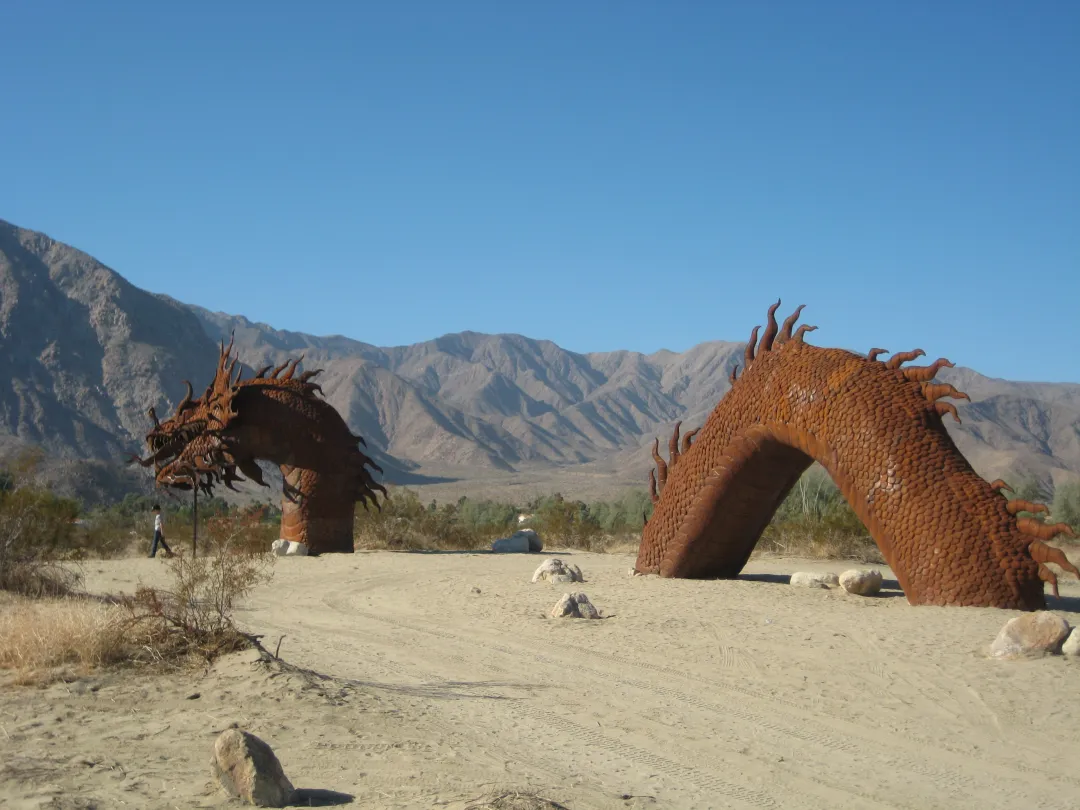
Anza-Borrego Desert State Park
Spanning more than 580,000 acres within the Colorado Desert, Anza-Borrego Desert State Park is a vast, remote wilderness on the edge of San Diego County, about a two-hour drive from the coast and one hour from the mountain town of Julian. Several significant archaeological sites that reflect the long history and presence of the Kumeyaay people in the region are located here, and a host of unique flora and fauna, such as the red-orange ocotillo and bighorn sheep, call the desert home. During spring, the desert’s valleys are carpeted with colorful wildflowers — and depending on the amount of winter rain, a rare “superbloom” event can occur. Outdoor enthusiasts enjoy the park for its numerous hiking trails, off-roading in four-wheel-drive vehicles and camping. Anza Borrego is a popular stargazing locale and recognized as an International Dark Sky Community Park — one of only three in the entire state. The town of Borrego Springs is surrounded by the park, and the Anza-Borrego Desert State Park Visitor Center should be your first stop upon arrival for information before venturing further. Another unique, and eccentric, feature of the desert are the 130 or so large-scale animal sculptures that can be found throughout Galleta Meadows, which are part of the Sky Art installation by Ricardo Breceda, who has been called “The Picasso of steel.” His giant metal sculptures that dot the landscape include a 350-long serpent, dueling grasshopper and scorpion, and an array of dinosaurs.
*Note: Weather conditions at Anza-Borrego can be extreme, especially in the summer when temperatures can reach as high as 125 degrees Fahrenheit (52 degrees Celsius). If you plan to continue into Anza-Borrego, be sure you’re prepared with plenty of water, fuel and supplies, and stop by the visitor’s center in Borrego Springs for more information.